What Makes a Great Triangle Investment Property?

Chatham County may sit just outside the Triangle, but that is precisely what makes it so appealing. People are increasingly looking for homes that offer more breathing room, natural beauty, and a quieter pace without giving up access to Raleigh, Durham, or Chapel Hill. For investors, that sweet spot of calm living and commutable convenience creates real opportunity. Understanding what drives demand here can help you spot properties with long-term potential.

Why Commuters and Relocators Are Looking This Direction

A growing number of people working in the Triangle are widening their home search to nearby areas, and Chatham County is high on that list. The region’s major employers continue to attract new residents each year, but not everyone wants the busier feel of urban or suburban cores. Chatham offers something different, a sense of space, scenic surroundings, and communities that still feel connected.

With improved highway access and more local amenities popping up, renters and buyers are finding they can enjoy a quieter lifestyle while still getting to work without much hassle. That shift makes properties here especially promising for steady demand.

What Today’s Renters and Buyers Want in This Area

The features that tend to perform well in Chatham County are often tied to lifestyle. Flexible floor plans and dedicated spots for remote work make homes feel more usable. Updated kitchens and bathrooms help properties stand out immediately. Outdoor space carries even more weight here than in many other markets, since porches, patios, and yards take advantage of the area’s peaceful setting.

For investors, low-maintenance features are also a plus, because durable materials and newer systems reduce ongoing costs and keep a property easy to manage. When a home combines comfort, functionality, and a bit of charm, it attracts both long-term tenants and future buyers.

Choosing Neighborhoods with Staying Power

Even within a strong region, certain areas offer more stability and growth potential than others. Homes with easy access to major roads, good schools, or everyday conveniences stay competitive. Chatham County is also evolving, with new developments, commercial growth, and planned community spaces shaping its future. Buying in or near these emerging areas can position you ahead of the curve as demand rises. The goal is to choose a location that feels good now but also has clear signs of long-term momentum, helping your investment hold value and stay occupied.

If you are exploring investment opportunities in Chatham County or other commutable areas near the Triangle, Melanie Thompson can help you find the right fit. Reach out today to get started.
You May Also Like

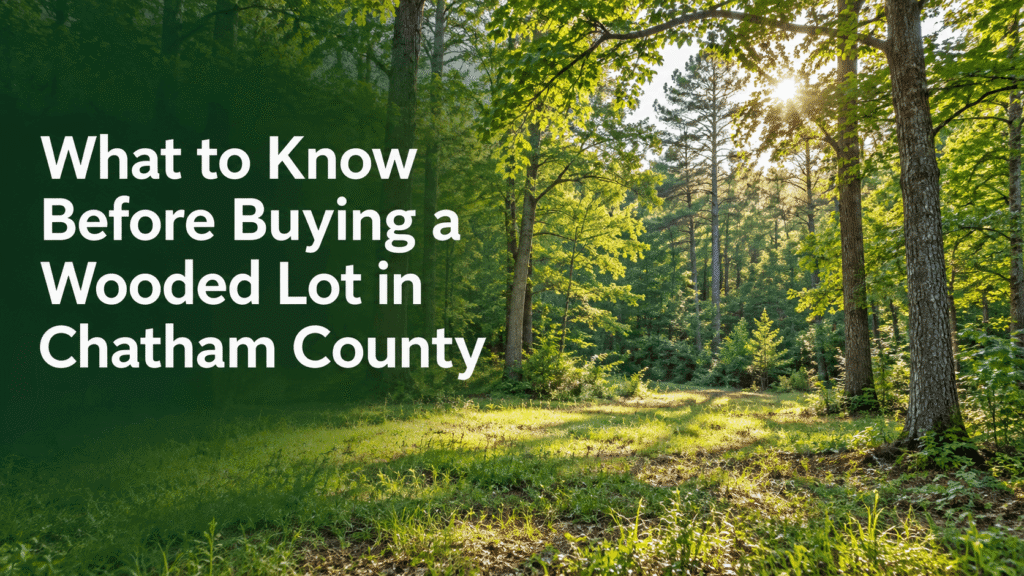
A wooded lot can offer something that’s getting harder to find: privacy, space, and a home that feels tucked away from the rest of the world. In Chatham County, buyers can find beautiful properties surrounded by mature trees while still staying within reach of Pittsboro, Chapel Hill, Raleigh, and the rest of the Triangle.

But buying a wooded lot is different from buying a home that’s already built. Before you fall in love with the view, it’s worth finding out what it will actually take to build there.

Make Sure the Land Can Support Your Home

A few acres may look like plenty of room, but not every part of a property will necessarily be buildable. The shape of the lot, topography, easements, streams, floodplain areas, and other restrictions can all affect where a home can go.

Your plans matter, too. A house, driveway, garage, outdoor living area, and other features all need space. Thinking about the entire property early can help you avoid buying land that works on paper but doesn’t work for the home you have in mind.

Don’t Overlook Septic and Well Requirements

Many properties outside more developed areas of Chatham County rely on private septic systems and wells rather than municipal water and sewer.

If sewer service isn’t available, Chatham County requires an approved on-site septic system for a home with plumbing. The septic evaluation considers whether the soil and site are suitable for the system. Buyers planning to use a private well will also need to account for the well location and required setbacks.

These aren’t details to save for after closing. Knowing what the property can accommodate can influence everything from the number of bedrooms in your home to where you put the driveway.

Decide How Wooded You Want to Stay

One of the biggest reasons to buy a wooded lot is, of course, the trees. But some clearing will typically be necessary for the house, driveway, utilities, septic system, and usable yard.

Before clearing begins, think about the trees you’d most like to preserve. Mature trees can provide shade, privacy, and a beautiful natural backdrop that would take decades to recreate.

The goal doesn’t have to be clearing as much as possible. Thoughtful site planning can help you create room for your home while keeping the character that attracted you to the property in the first place.

Budget for Buying a Wooded Lot in Chatham County

Raw land can come with expenses you wouldn’t encounter when buying an existing home. Depending on the property, those might include surveying, soil evaluation, clearing, grading, driveway construction, utility connections, a septic system, or a well.

A lower-priced lot isn’t necessarily the better deal if preparing it for construction will be significantly more expensive.

Start With the Right Team

You don’t need to understand every detail of land development before you start looking. You do want people on your side who know which questions to ask.

A real estate professional familiar with Chatham County land and new construction, like Melanie Thompson, can help you evaluate properties with your long-term plans in mind and connect you with builders and other professionals when you need more specialized guidance.

The right wooded lot can give you the best of both worlds: a home designed around your needs and a setting that already feels established. Taking the time to understand the land before you buy can help make sure the property you love is also a property you can build on.

There are plenty of reasons to hesitate before buying a home right now.

Mortgage rates remain high compared with what buyers grew accustomed to a few years ago. Everyday expenses are taking a bigger bite out of household budgets. And after layoffs and a less certain job market, some buyers simply don’t feel as financially secure as they once did.

So, if you’ve been thinking about buying a home in Chatham or Wake County, waiting until spring might sound appealing. Maybe mortgage rates will come down. Maybe the economy will feel more stable. Maybe buying a home will simply feel less risky.

That could happen. But waiting has its own tradeoffs.

There Are Good Reasons to Wait

Buying a home is a major financial commitment, and uncertainty about your job or monthly budget shouldn’t be brushed aside just because you find a house you love.

If buying at today’s mortgage rates would stretch your budget, waiting may give you time to save more, pay down debt, or strengthen your overall financial position. The same is true if you’re worried about your employment situation or expect your income to change.

There’s also the possibility that borrowing conditions could become more favorable. But no one knows exactly where mortgage rates will be next spring.

That uncertainty is important. Waiting for a specific rate can easily turn into waiting six months or a year for a market that never arrives exactly as expected.

Waiting Could Mean More Competition

If mortgage rates do fall significantly, you probably won’t be the only person who notices.

Buyers who have spent months sitting on the sidelines could return to the market. That could mean more competition for desirable homes, particularly in popular parts of Chatham and Wake Counties.

Spring also tends to bring more listings, so buyers who wait may have a larger selection. But more inventory doesn’t necessarily mean an easier purchase if there are also more people competing for those homes.

Buying during a slower period can sometimes give buyers more breathing room. Depending on the property and seller, there may also be opportunities to negotiate on price, closing costs, repairs, or other terms.

Buy When the Numbers Work for You

Ultimately, the best time to buy isn’t determined by the season—or by predictions about where the economy is headed.

It’s when you have stable enough finances, a comfortable monthly budget, and a home available that makes sense for your needs.

For some buyers, that may mean waiting until spring. For others, today’s quieter market could offer an opportunity worth exploring. You don’t necessarily need to commit to buying just because you start looking, either. Understanding what homes are available and what they would actually cost each month can help you make a much more informed decision.

Talk Through Your Options With Melanie

If you’re wondering whether it makes more sense to buy now or wait, Melanie Thompson can help you look at what’s actually happening in the Chatham and Wake County markets—not just national headlines. She can help you explore available homes, understand local conditions, and decide whether the opportunities available today make sense for you.

Contact Melanie today to start a conversation about your home search and whether now is the right time to make your move.

Most people who plan to buy a home aim for spring. The listings pile up, the yards look their best, and it feels like the season you are supposed to move. But the spring rush comes with a cost. More buyers, more competition, and sellers who know they hold the upper hand.

By late summer, that pressure eases. The crowd thins out, the pace slows, and the buyers who are still looking tend to find a quieter, more workable market. In Chatham County, that shift can work in your favor in ways the busy months rarely do.

Less Competition Means More Room to Think

Spring buyers often move fast because they have to. A home hits the market on Thursday and has three offers by Sunday. That kind of pace pushes people into quick decisions and waived contingencies they later regret.

Late summer feels different. Fewer buyers are actively searching, which gives you time to tour a home twice, sleep on it, and walk the property without someone waiting behind you. In a market like Chatham County, where a wooded lot or an acreage home deserves a careful look, that breathing room matters.

Sellers Who Are Still Listed Are Usually Ready to Move

A home that has been sitting since spring tells you something. The seller may have priced it high early in the year and watched the busy season pass without an offer. By late summer, many of those sellers are ready to get serious.

That often shows up in price adjustments, more flexibility on closing dates, and a greater willingness to negotiate repairs. You are dealing with people who want to sell, not people testing the market. For a buyer, that changes the whole tone of the conversation.

You Get an Honest Look at How a Home Lives in the Heat

Chatham County summers run hot and humid, and late summer is when a home shows you the truth. You find out how well the HVAC keeps up, whether the shade trees actually cool the yard, and how the screened porch feels at the end of a warm day.

Touring in August also lets you check the things buyers forget in cooler months. Does the yard drain after a summer storm. Do the windows seal against the humidity. Is the outdoor living space usable when it counts. These are the details that shape daily life once you move in.

Timing Lines Up With a Calmer Fall Closing

A late summer offer often means a fall closing, and fall is one of the easier seasons to move in Chatham County. The weather cools, movers have more availability, and you settle in before the holidays rather than during them.

For families, that timing can line up with getting kids settled after the school year starts. For remote workers and anyone relocating from a busier part of the Triangle, it means arriving in time to enjoy the quieter fall months that make this area feel like home.

Ready to Explore What Is Available Right Now?

The late summer market rewards buyers who are paying attention. If you are thinking about a move to Chatham County, Melanie Thompson can help you find the right home while the competition is light and sellers are ready to deal. Reach out today at 919-559-0956 or contact Melanie here to start the conversation.

There is a certain moment that happens to almost everyone who moves to Chatham County. A few months in, the dust has settled, the boxes are unpacked, and life has found its new rhythm. And somewhere in there, usually quietly and without much fanfare, they stop thinking about where else they might go next.

That is not something you can manufacture. It is what happens when a place actually fits.

The pace changes you

Most people who land in Chatham County come from somewhere faster. Busier neighborhoods, longer commutes, weekends that felt like errands with a dinner squeezed in. The shift here is noticeable almost immediately. Mornings feel different when your front door opens to birdsong instead of traffic. Evenings stretch out in a way they did not before.

That slower rhythm compounds. People start cooking more, spending more time outside, and actually using their porches. The home stops being a place to sleep between obligations and starts being a place they genuinely want to be.

Community that forms without much effort

One of the things people do not expect is how quickly they feel like they belong. Whether it is a regular table at Aromatic Roasters, a familiar face on the Knight Farm trails, or a neighbor at a Thirsty Skull patio who becomes a genuine friend, Chatham County has a way of making connection feel easy.

That is partly the scale of it. Pittsboro is not so large that you stay anonymous, but it has enough going on that there is always something drawing people together. The farmers market, events at MOSAIC, community gatherings at the library — these things add up to a social fabric that takes years to build in bigger places and seems to happen here on its own.

Room to grow into the life you actually want

The other reason people stay is simpler: there is room. Room for the vegetable garden they always meant to plant. Room for a real home office. Room for kids to run around and come back dirty. Room for the dog that needed more than a postage-stamp yard.

In Chatham County, space is not a luxury reserved for a different tax bracket. It is just how things are. And once people have it, they find it very hard to give back.

That combination — a quieter pace, genuine community, and physical space to breathe — tends to recalibrate what people think they need. The places they came from start to feel like the compromise. Chatham County starts to feel like the answer they did not know they were looking for.

Ready to find your place here?

Melanie Thompson has helped countless buyers discover what Chatham County living actually feels like from the inside. If you are thinking about making a move, reach out today at 919-559-0956 or contact Melanie here to start the conversation.

Scroll to Top